

What If Wednesday: Let's Ask the Hard Questions (Gently)
We usually keep our What If Wednesday feature quirky and fun—focusing on odd questions, interesting hypotheticals, and little daydreams.
But sometimes, life throws us a question we really don’t want to think about. The trouble is, completely ignoring it only makes things much harder for the people we care about most.
So, let's ask a tough one today, gently:
What if the unthinkable happened—and you sadly died here in France?
It is not a fun topic. It is definitely not uplifting. But maybe a tiny bit of irreverence, paired with some solid practical preparation, can make life significantly easier for those left behind.
Music, Memories, and a Smile
This entire idea actually came to me at a funeral we attended recently. The music choice—This Is My Life by Shirley Bassey—was absolutely iconic. It was perfect for the person, and it managed to make everyone smile through their tears.
Bob, of course, immediately had to take the idea a step further. He has officially announced that he wants Firestarter by The Prodigy played at his funeral. It is a very "Bob" choice! Hopefully, it won't be too upsetting for the congregation, but that is the entire point: we should get to choose our own send-off.
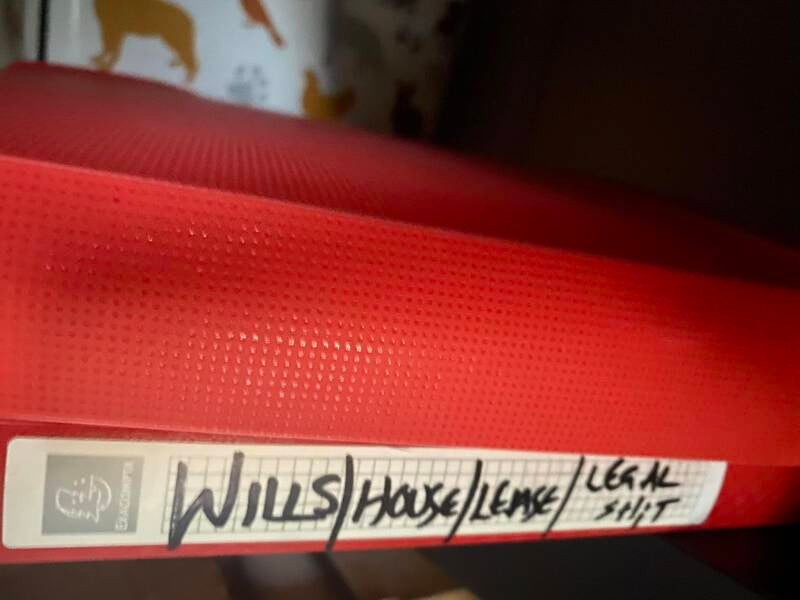
That conversation is what sparked our little household project: creating a dedicated home folder packed with helpful information, so no one has to guess or scramble if the worst happens.
Our "Less Stressy" In-Case-of-Emergency Folder
Our folder isn't completely finished yet. It doesn't include all of our active passwords—because let's face it, there are far too many of them, and we need to work out a secure way to store them—but it is a vital start.
If you want to create your own, here is what our checklist includes:
-
Identity basics: Vital personal information about each of us.
-
Insurance details: Policies, policy numbers, and contact hotlines.
-
Asset ownership: Clear details on who legally owns what.
-
Funeral wishes: Preferred music tracks, cremation/burial choices, and ceremony ideas.
-
Professional contacts: Phone numbers and addresses for our banks, our notaire, and our pension or insurance providers.
-
Official documentation: Photocopies of key documents (passports, marriage certificates, cartes de séjour, and cartes vitale).
The concept is incredibly simple: when someone has to pick up the pieces, this folder acts as a step-by-step guide. It means less stress, fewer unanswered questions, and hopefully, even a small laugh.
A Practical Guide for Those Left Behind
If you are handling an estate or a loss on French soil, here is a basic timeline of steps.
Disclaimer: This is intended as practical guidance for expats and residents, not formal legal advice.
Phase 1: The Immediate Steps (First 24–48 Hours)
-
Medical Certification: A doctor must formally certify the death and issue a certificat de décès (this is the initial medical certificate, which is different from the civil death certificate).
-
The Mairie Declaration: You must officially declare the death at the local town hall (mairie) within 24 hours to obtain the official acte de décès. Pro tip: Ask for plenty of original copies; you will need them for almost every administrative body in France.
-
Sudden or Accidental Death: If the passing was sudden, accidental, or unexplained, emergency services must be called via 112 or the gendarmerie (17).
⏳ The French Timing Rule: French law strictly requires that a burial or cremation take place within 14 days of death (inclusive of weekends and public holidays). While this timeline can feel incredibly fast-paced to foreigners, local funeral directors (pompes funèbres) deal with this constantly and will guide you through the process seamlessly.
Phase 2: Notifications and Estate Organisation
-
Notify family and friends: Reach out to inner circles immediately.
-
Appoint a funeral home: Contact a registered funeral company or a pre-paid plan provider. They are often highly efficient and can handle registering the death at the mairie on your behalf. Under French law, using a licensed funeral home is compulsory.
-
Inform income sources: Contact employers, professional clients, or relevant pension providers.
-
Instruct a Notaire: This is an essential step if the deceased owned property in France, left a will, or had an estate valued over €5,000. In France, inheritance and probate are handled exclusively by a notaire, rather than a standard solicitor. Contact one early.
Phase 3: Practical Administration and Bank Rules
-
Banking restrictions: Sole bank accounts are frozen immediately upon notification of death. Joint accounts usually remain active, though certain local restrictions can apply.
-
Funeral fund releases: By law, up to €5,965 can be directly released from the deceased's bank account to pay for funeral costs, provided you present the official acte de décès and an invoice from the funeral home. If an insurance plan isn't in place, funeral directors have the legal right to claim this directly from the account.
-
Insurance providers: Notify health insurance (assurance maladie / CPAM), home insurers, and car insurance providers.
-
Vehicles: Update or cancel vehicle registration documents (certificats d'immatriculation) and associated policies.
Phase 4: Later Actions (Weeks to Months)
-
The Tax Office: A final French income tax declaration (déclaration de revenus) must eventually be submitted for the deceased.
-
Digital footprints: Close down or memorialise digital accounts, emails, and social media passwords.
-
Consulate notification: If you are a British expat (or hold another foreign nationality), it is wise to register the death with your relevant embassy or consulate, particularly if there are lingering assets or property back home.
What We Learned (Over to You!)
We promise, looking into this isn't morbid—it’s just a sensible part of living a great life abroad. A tiny bit of organisation today can save your family hours of administrative tears later on.
We would love to open this up to our community: What have we missed in our folder? What is the one practical thing you wish someone had told you when you lost a loved one in France?
Some of the best community advice we've gathered so far:
-
Keep your passwords and digital logins somewhere secure but accessible.
-
Write down crystal-clear instructions regarding your burial or ceremony wishes.
-
Map out the exact physical location of your will, house deeds, and insurance contracts.
-
List exactly who to call first—including a contact who speaks fluent French if you don't!
A little preparation goes a long way to making a stressful time just a little bit less... stressy.
– Jen x
Add comment
Comments