

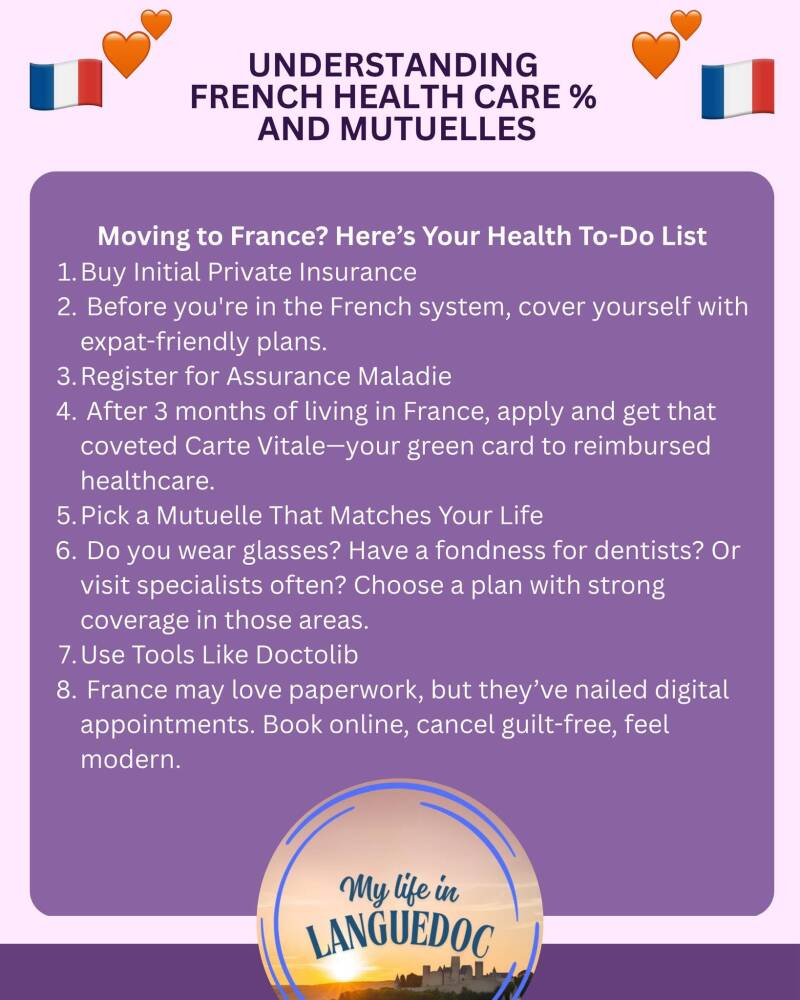
The Secret to Not Crying Over Medical Bills in France: Understanding Mutuelle & Assurance Maladie
When moving to France, most people arrive prepared for crispy morning baguettes, charming local markets, and legendary French paperwork. What often catches newcomers off guard, however, is the unique way the French healthcare system actually reimburses your medical visits.
If you are planning a move or currently trying to make sense of your first doctor visit in France, here is the quick guide to avoiding surprise bills written entirely in technical French!
The Croissant Analogy: How Coverage Really Works
France's public health insurance system, managed through Assurance Maladie, is widely regarded as one of the finest in the world. However, there is a fundamental detail many people miss before moving.
Public health insurance generally only covers about 70 percent of the official standard tariff for a general practitioner visit.
Think of it like ordering a fresh croissant at a boulangerie, but the baker hands over only 70 percent of the pastry and keeps the rest until someone else pays! The remaining percentage that you are expected to pay out of pocket is called the ticket modérateur.
If you visit a specialist, require prescription glasses, need dental work, or end up staying in hospital, those unrecovered percentages can add up very quickly.
Enter the Mutuelle: Your Healthcare Sidekick
This is where a mutuelle (supplementary health insurance) becomes essential. A mutuelle acts as your financial cushion, stepping in to pay the remaining 30 percent gap that state insurance leaves behind.
While taking out a private top up policy is not legally compulsory for retirees or self employed residents, over 95 percent of people living in France hold one. For salaried employees in the private sector, employers are required by law to offer a collective plan and contribute at least 50 percent of the cost. You can read more about official rules on the Service-Public Health Portal.
How to Set Up Your French Healthcare Step by Step
To make sure your future self is not stressing over medical invoices, here is the ideal sequence for setting up your cover:
Step 1: Register with Assurance Maladie
Submit your registration documents (Form S1106) to your local Caisse Primaire d'Assurance Maladie (CPAM) to get your social security number and order your Carte Vitale.
Step 2: Declare Your Primary Doctor
Once registered, choose a local general practitioner and declare them as your médecin traitant. Consulting through your registered doctor ensures you receive the maximum standard 70 percent reimbursement rate.
Step 3: Select a Mutuelle Policy
Shop around for a top up policy tailored to your lifestyle. If you visit specialists often or need complex dental care, choose a policy with higher coverage tiers (such as 150 percent or 200 percent of the standard tariff).
Pro Tip: Always take your Carte Vitale and your mutuelle card with you to every doctor appointment and pharmacy visit. In most cases, the system processes payments digitally via tiers payant, meaning you will not have to pay anything upfront at the pharmacy counter!
Jenna xx


Add comment
Comments